Tata Consultancy Services (TCS) and Siemens Energy AG have signed two memorandums of understanding that extend their long-running relationship into a new phase focused on industrial AI, digital infrastructure, and data center energy needs. The agreement brings together TCS’s AI, data, and engineering capabilities with Siemens Energy’s strengths in power generation, electrification, and grid technologies. It also includes Siemens Energy India Limited supporting TCS’s HyperVault data center business in India.
What the agreements cover
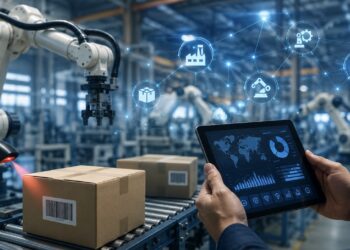
TCS says it will continue as a preferred IT partner to Siemens Energy AG, helping build an agile, secure, resilient, and cost-optimized digital backbone. The partnership between TCS and Siemens will focus on AI-powered factory modernization, including digital twins, predictive analytics, smart manufacturing, tighter OT-IT integration, and intelligent vision systems.
The second MoU is aimed at infrastructure; Siemens Energy India Limited will support TCS’s AI data center business, HyperVault, with power-generation, electrification, grid, and software capabilities designed to meet the energy demand of AI-ready data centers. That detail is important because the energy load of AI infrastructure has become a central operational issue, not just an engineering one.
[Also Read: Earth Day 2026: Data Center Leaders on Balancing AI Growth and Sustainability ]
The International Energy Agency says data centres consumed around 415 TWh of electricity in 2024, roughly 1.5% of global electricity use. Energy consumption had been growing at about 12% per year over the previous five years. In a separate 2026 update, the IEA said data-centre electricity demand rose 17% in 2025, while AI-focused data centres grew even faster, at 50%.
The inclusion of Siemens Energy India Limited and HyperVault suggests the companies are treating power reliability and infrastructure design as part of the AI stack.
TCS says the relationship with Siemens Energy AG stretches back more than two decades; that history matters because long partnerships tend to move from project delivery to deeper process integration only after both sides have established operational trust. In other words, this is not a first-touch alliance; it is an expansion of an existing one.
[Also Read: TCS and University of Cincinnati Launch ‘My First AI Job’ Program for Students ]
The pressure on AI infrastructure is rising
The IEA’s latest analysis is the clearest signal that the market is moving in this direction. It says electricity demand from data centres is rising faster than overall power demand, and that AI-specific facilities are expanding at a sharper rate than general-purpose facilities. For companies building industrial AI systems, that changes the decision tree: compute, cooling, grid access, and reliability now sit alongside software performance and model correctness.
The focus is on intelligent operations, manufacturing efficiency, and the power systems needed to support AI workloads.