How traceability is evolving from a compliance checkbox into India’s next manufacturing advantage and why CIOs must lead the charge.
For decades, traceability meant a barcode on a box. Scan it, log it, move on. That era is over. Across India’s manufacturing sector, from pharma to FMCG, from automotive to agri-processing, traceability is undergoing a fundamental transformation. It is no longer a backend operational tool. It is becoming the intelligence layer of the modern factory.
“What was once a simple QR Code is now a gateway to real-time operational intelligence”
Static Codes Are Dead, Intelligent Systems Are Here.
The old barcode solved an identification problem. Today’s traceability stack — powered by QR codes, RFID, IoT sensors, cloud platforms, and real-time analytics- solves a decision-making problem. Global standards bodies like GS1 are enabling interoperable frameworks that capture Critical Tracking Events across every node of the supply chain, giving manufacturers end-to-end visibility from raw material sourcing to last-mile delivery.
For India, where supply chains span hundreds of suppliers, distributors, and logistics partners operating across fragmented networks — this is not incremental improvement. It is a structural transformation.
[Also Read: AI Data Debt: The Risk Lurking Beneath Enterprise Intelligence ]
The Business Case Has Never Been Stronger
Three forces are converging simultaneously. Consumers demand product origin transparency. Regulators require digital compliance trails for pharmaceuticals, food safety, and electronics exports. And global buyers now mandate serialized proof of sourcing as a condition of trade. Manufacturers who cannot satisfy all three, in real time, will find themselves locked out of premium markets.
Sectors most exposed to counterfeiting and quality risk, pharma, FMCG, agriculture, electronics, are already moving toward full serialization. The rest of Indian manufacturing is not far behind.
Traceability as a Decision Engine
The most important shift is not technological, it is strategic. Modern traceability systems generate continuous operational data: every scan, every shipment event, every handling condition. That data, when properly harnessed, enables manufacturers to reduce wastage, optimize inventory, sharpen production forecasts, and manage recalls with surgical precision.
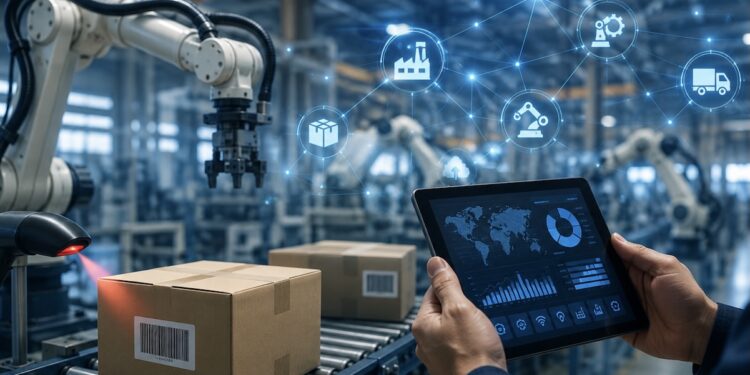
Industry 4.0 integration is accelerating this further. Smart factories are embedding traceability directly into machinery, packaging lines, and logistics systems, moving from after-the-fact reports to live operational awareness. The question manufacturers are now asking is no longer “where is this product?” It is “what is this product telling us about our operations?”
THE CIO IMPERATIVE
The next phase of manufacturing leadership will not be defined by production output alone. It will be shaped by visibility, trust, and intelligence. CIOs who position traceability as a strategic data layer, not an IT compliance project, will give their organizations both the operational resilience and market credibility to compete globally. The window to move early is now.
Indian manufacturers who invest in intelligent traceability today are not just solving a compliance challenge. They are building the data foundation for the next decade of competitive manufacturing.
(The author is S R Srinivasan, CEO at Qode Next India Pvt. Ltd, and the views expressed in this article are his own).
[Also Read: ABB to Invest $75 Million to Expand Manufacturing and R&D in India ]