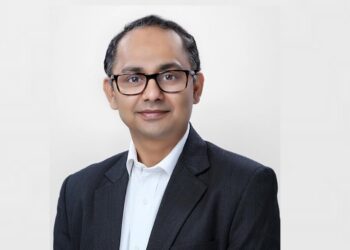
AMD has appointed Tim Ryan, Citi’s Head of Technology and Business Enablement, to its board of directors. Ryan brings more than three decades of experience in technology transformation, business operations, and financial services.
Joseph Householder is leaving the board after more than 11 years, AMD also announced changes to its board committees, including KC McClure becoming chair of the Audit and Finance Committee.
Who is Tim Ryan?
Tim Ryan joined Citi in June 2024 as Head of Technology and Business Enablement. His responsibilities include working across the bank’s technology and transformation operations, with a focus on process simplification and modernisation. Citi lists him as a member of its Executive Management Team.
Before Citi, Tim Ryan spent more than three decades at PwC, where he held several senior positions. He served as U.S. Chair and Senior Partner from 2016 through 2024 and was responsible for the firm’s strategy and execution and the activities of its roughly 75,000 employees during that period.
“Tim’s extensive experience across technology, operations and finance will bring valuable perspective to AMD’s board as we execute our long-term strategy and pursue the significant opportunities ahead in AI and high-performance computing,” said Dr. Lisa Su, AMD chair and CEO. “I also want to thank Joe Householder for his dedicated service and many contributions to AMD. His thoughtful counsel and financial stewardship have played an important role in AMD’s transformation and growth.”
His experience is largely about running and reforming complex organisations rather than developing semiconductor architectures. His role at Citi places him close to one of the world’s largest technology-intensive financial institutions, while his PwC career exposed him to technology, strategy, regulatory and corporate governance issues across a broad range of companies.
[ALSO READ: Intel Appoints Dean Jarnac as Chief Sales Officer to Strengthen Customer Engagement ]
Joseph Householder’s retirement?
AMD’s 2026 proxy statement identified Householder as chair of its Audit and Finance Committee, a board function closely tied to financial reporting, risk assessment, compliance, internal audit and oversight of AMD’s external auditor.
AMD has now moved KC McClure into the chair position for that committee, while also appointing her to the Nominating and Corporate Governance Committee. AMD lead independent director Nora Denzel has joined the Audit and Finance Committee.
Tim Ryan’s technology background is relevant to AMD
AMD’s competitive position is increasingly dependent on more than the specifications of its processors.
AI infrastructure is a systems business. Customers buying large deployments need processors, accelerators, networking, software, system integration and long-term support. AMD is consequently competing across more of the technology stack than it did when its business was primarily associated with CPUs and graphics chips.
Tim Ryan has spent years dealing with the organisational side of technology: modernising processes, managing large workforces, overseeing transformation programmes and balancing technology investments with business requirements. Citi says his work includes driving cross-firm process simplification and modernisation.
For AMD, that perspective can be relevant as AI infrastructure becomes a larger and more operationally complex part of the company.
Historically, semiconductor company boards have generally balanced several areas of expertise: engineering and technology, finance, manufacturing, global operations, legal and corporate governance.
Tim Ryan adds one more layer to that mix: experience running technology transformation inside a very large financial institution and advising major businesses earlier in his career at PwC.
[ALSO READ: AMD Acquires Taalas to Expand AI Inference Capabilities ]
Tim Ryan’s appointment should therefore be seen as part of AMD’s progression from a semiconductor challenger into a much larger AI and data-center infrastructure company.
He brings a background in technology transformation, enterprise operations and finance rather than chip engineering. Meanwhile, AMD has maintained its existing technical leadership under Lisa Su and its established engineering organisation.
The combination is significant because the next stage of AMD’s growth will require both