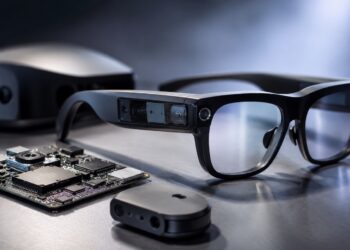
Meta has pushed smart glasses further down the price ladder. Meta and EssilorLuxottica introduced Meta Glasses starting at $299, a lower-cost line built around Meta AI, camera capture, open-ear audio and voice control. Meta’s move is to widen the audience for AI wearables after the higher-end Ray-Ban Display glasses launched at about $800 last year.
Meta launches AI smart glasses with 26 styles, across several colors, lenses and frames, and is compatible with prescription lenses. The company is also using a new naming approach: these models are not branded as Ray-Ban or Oakley, unlike earlier Meta-EssilorLuxottica products. Meta said these are its first AI glasses to launch with Meta AI powered by Muse Spark from day one.
The launch includes three frame families: Meta Adventurer, Meta Fury, and Meta Glasses by Kylie, the last of which is a slim oval frame co-designed with Kylie Jenner. The glasses were built with three-way adjustable nose pads, a dedicated action button, and a battery that lasts over 8 hours, with the charging case adding up to 40 additional hours.
[ALSO READ: Qualcomm Bets on Personal AI With New Snapdragon START Program ]
What people get with AI smart glasses
These glasses are meant to work as a hands-free assistant rather than as a phone replacement. Meta says they include open-ear speakers, a multi-mic array for clearer calls and voice control, and the ability to take photos and videos hands-free. The company also says Meta AI can answer questions, help with daily tasks, and support live translation.
The software side is now a bigger part of the AI smart glasses; Meta said the glasses will get dynamic photo, which captures multiple frames and recommends the best shot, and that pedestrian navigation is coming soon for displayless glasses. Meta is also adding support for 14 new languages to live translation, including Hindi, Japanese, Mandarin Chinese and Korean.
What makes this cheaper line different
Meta’s new AI smart glasses start at $299, while its Ray-Ban Meta (Gen 2) glasses (non-display models) glasses start at ₹39,900 in India. The higher-end Meta Ray-Ban Display (with the in-lens display and Neural Band) launched at ~$799 USD in the US. In India, references point to much higher pricing (e.g., around ₹1,25,000 in some reviews), and it may not be widely available there yet.
The lower-cost glasses are aimed at making the category less niche and more routine.
The Meta Ray-Ban Display model has a full-colour in-lens display, 12 MP camera, two-way video calling, navigation, and gesture control via the Meta Neural Band. The new cheaper Meta Glasses, by contrast, are built around voice, audio and camera use, with no display mentioned in the launch announcement. That is an important distinction:
Meta is now selling two different ideas of smart glasses, one display-led and one everyday, displayless and cheaper.
[ALSO READ: Meta Expands Custom AI Chips Deal With Broadcom to Power AI Ambitions ]
What it means
Meta is trying to move smart glasses from early adopters to a larger consumer market. Meta accounted for about 76.1% of the 9.6 million smart glasses shipped globally last year, so the company already has scale in the category. Cheaper pricing can matter more than specs in wearables.
Meta is building a product category around “personal intelligence”.
Comparison with other smart glasses players
Meta is not alone, but it is ahead in commercial scale. Google and Apple are creating similar devices, while Snap has launched higher-priced AR glasses at $2,195, which are positioned much closer to augmented reality than to Meta’s everyday AI glasses. The market is converging around two tracks: lightweight AI glasses for daily use, and heavier AR-style products for greater immersive overlays.
The Ray-Ban Meta line focuses on an iconic frame, camera, open-ear audio and social sharing. The Meta Ray-Ban Display adds a lens display and wristband control. The new Meta Glasses line aims lower on price and broader on style. That is a sensible segmentation for a market that is still trying to define what smart glasses should be.
Key data points
| Launch date | June 23, 2026 |
| Starting price | $299 |
| Styles at launch | 26 |
| Battery life | Over 8 hours |
| Charging case | Up to 40 additional hours |
| AI platform | Meta AI powered by Muse Spark |
| Languages added for live translation | 14 |
| Meta share of global smart-glasses shipments last year | About 76.1% |
| Global smart-glasses shipments last year | 9.6 million units |