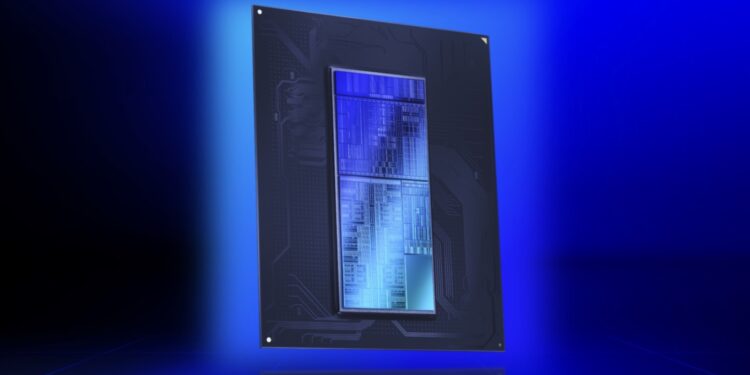
Intel today announced the launch of its new Intel Core™ Ultra 200HX Plus series mobile processors, introducing two new HX-class parts aimed squarely at gaming laptops, content creators and mobile workstation users.
The company said the new chips begin shipping in OEM systems immediately, and it has positioned the models as modest but measurable performance uplifts over the prior HX generation.
According to the company, the 290HX Plus delivers about an 8% average gain in gaming frame rates compared with the previous Core Ultra 9 285HX and roughly 7% faster single-threaded performance in standard CPU benchmarks, while upgrades from much older high-end chips are larger. Those numbers reflect Intel’s own testing and specific configurations; the company also sets out the conditions and caveats for its comparisons.
Two technical points stand out. First, Intel says these parts raise the die-to-die link frequency by up to 900 MHz, which it frames as a way to reduce memory/controller latency and improve system responsiveness for games and real-world workloads. Second, the family debuts a software optimisation layer, the Intel Binary Optimisation Tool, that the company describes as a binary translation/optimisation feature intended to improve instructions-per-cycle (IPC) on some games and applications. Both items are presented as part of Intel’s combined hardware-and-software approach to squeezing more performance from the existing architecture.
Josh Newman, General Manager and Vice President of Product Marketing, Client Computing Group, said, “With the introduction of the Intel Core Ultra 200HX Plus series, we’re pushing mobile computing performance even further for the gamers, creators, and professionals who demand the best. With higher die-to-die frequencies and our new Intel Binary Optimisation Tool, the new Intel Core Ultra 9 290HX Plus and Ultra 7 270HX Plus deliver meaningful, real‑world performance gains so users can experience smoother gameplay, faster creation workflows, and more responsive workstation performance.”
On connectivity and platform features: the announcement lists modern laptop staples: support for Thunderbolt 5, Wi-Fi 7, and recent Bluetooth standards. The vendor rollout starts today with a broad list of OEM partners that includes Acer, ASUS and Dell, among others. Several gaming notebooks from those vendors are named as shipping with the new silicon.
Where this fits in the market: the 200HX Plus family is best read as an “Arrow Lake” refresh, an incremental, targeted push to keep Intel competitive in the premium laptop segment while more substantial new architectures are staged for later releases. Industry reporting over the past year has framed these “Plus” or refresh parts as Intel’s way to extract more performance and platform features without a wholesale architectural change. That context helps explain why the company leans on platform and software optimisations rather than claiming a large generational leap.
The Core Ultra 200HX Plus series is a conservative, engineering-led update that brings higher die-link speeds, a new binary optimisation feature and platform connectivity improvements to high-end mobile PCs. For users focused on pure performance per dollar or generational leaps, the announcement is useful context; for those making a purchase decision today, the independent reviews that follow product shipping will be the decisive data points.