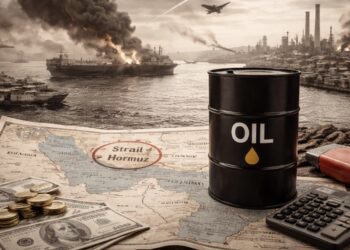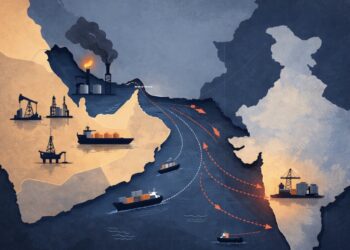
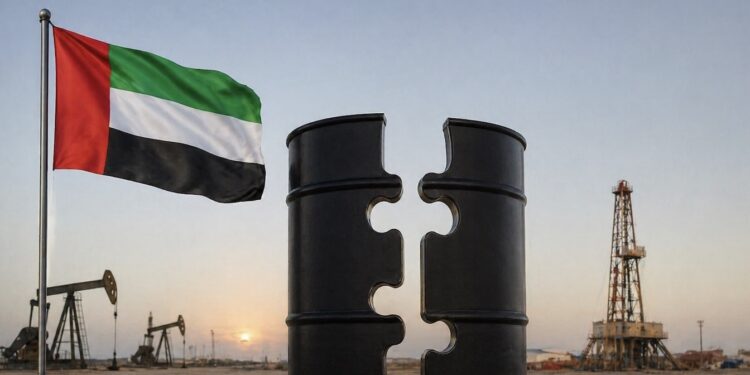
The UAE announced it will leave OPEC on May 1 and withdraw from OPEC+, a move that immediately raises questions about supply discipline, Gulf politics, and the direction of global oil prices. The UAE’s exit from OPEC and OPEC+ has a major impact on the oil market because the United Arab Emirates is one of the alliance’s largest producers and one of the few members with room to lift output quickly. UAE’s exit will weaken the cartel’s influence, allowing the UAE to boost production toward a target of 5 million barrels per day
About OPEC and OPEC+
OPEC, the Organization of the Petroleum Exporting Countries, was founded in Baghdad in 1960 by Iran, Iraq, Kuwait, Saudi Arabia and Venezuela to coordinate petroleum policy and support stable prices. OPEC’s official materials describe it as a long-running producer bloc that now includes 12 countries, with the UAE joining in 1967.
OPEC+ is the broader arrangement formed in 2016, when OPEC partnered with non-OPEC producers, including Russia, to manage supply more tightly.
The current OPEC members are Saudi Arabia, the UAE, Kuwait, Iraq, Iran, Algeria, Libya, Nigeria, Congo, Equatorial Guinea, Gabon and Venezuela, while OPEC+ also includes Russia, Azerbaijan, Kazakhstan, Bahrain, Brunei, Malaysia, Mexico, Oman, South Sudan, Sudan and Brazil.
[Also Read: Global Oil Shock: How the US–Israel–Iran Conflict Is Disrupting Energy Markets and Supply Chains ]
Reasons for the UAE’s exit from OPEC?
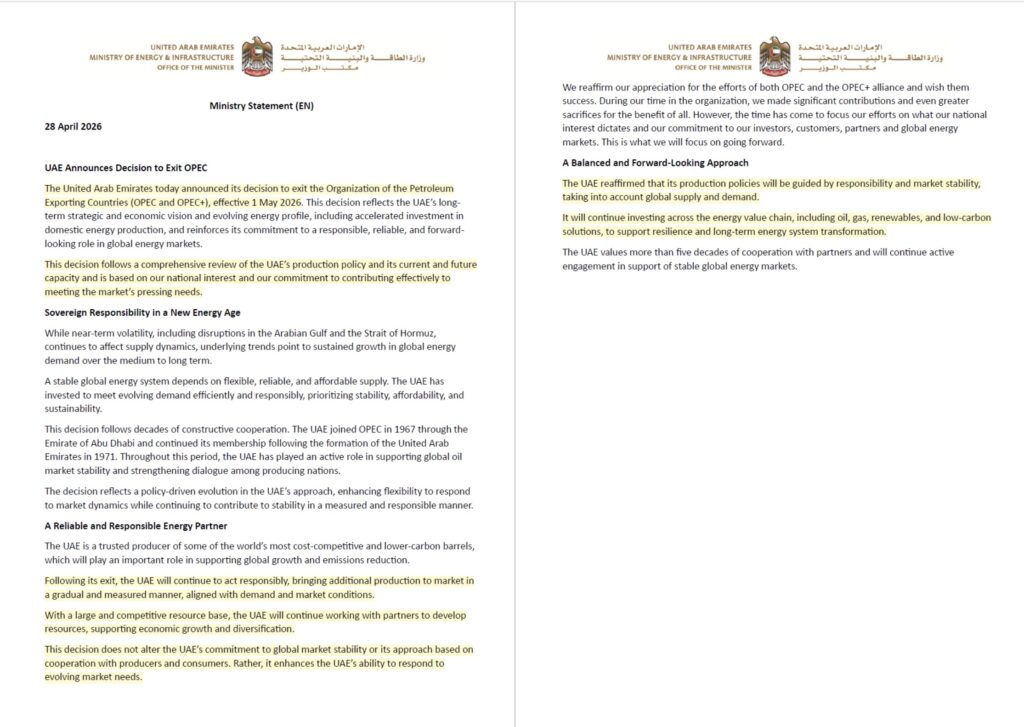
One of the main reasons to exit from OPEC is policy freedom, the UAE has invested heavily in new production capacity and has long pushed for higher output within OPEC+ than its quota allowed. The UAE had been producing around 3.3 million barrels a day before the war and had a capacity for roughly 4.5 to 5.0 million barrels a day. According to the statement, the UAE’s exit from OPEC is part of its “long-term strategic and economic vision” and a desire to bring additional production to market in a “gradual and measured manner,” aligned with demand and market circumstances.
The UAE is not the first country to step away from the group. Angola exited OPEC at the start of 2024, Ecuador left in 2020, and Qatar left in 2019. OPEC’s share of global supply rose again under OPEC+, but that share has already come under pressure during the current US-Iran war.
The main benefit for the UAE is control; outside OPEC and OPEC+, Abu Dhabi can manage production around its own investment cycle, not around group quotas. That matters because the country has spent years expanding ADNOC capacity and wants to turn that investment into barrels more quickly when market conditions allow. The UAE wants the flexibility to sell more oil, meet demand, and align output with its own long-term energy strategy rather than with joint limits set elsewhere.
What it means for Saudi Arabia and the Gulf
The immediate political effect is bigger than the instant market effect. Saudi Arabia, OPEC’s largest producer, had no immediate reaction when the UAE announced its exit plan. But the relationship between Riyadh and Abu Dhabi has already been under strain on regional and economic issues, and the UAE has been carving out a more independent foreign-policy line across the Middle East and Africa.
[ Also Read: Ant International launched its First Middle East Office in Riyadh, Saudi Arabia ]
The UAE’s exit from OPEC removes one of the Gulf’s most flexible producers from the collective framework that Saudi Arabia has traditionally used to manage supply and defend prices.
Other Middle Eastern producers will read this as a signal that energy policy is becoming more national and less collective.
Oman, Bahrain and the other OPEC+ participants are not in the same position as the UAE, but the move still puts pressure on the idea that Gulf producers will always move as one bloc.
The US-Iran war
The war has effectively disrupted the Strait of Hormuz, and the UAE is acting at a moment when Gulf supply routes are already under pressure. The UAE can still move some crude through Fujairah, and Saudi Arabia has a Red Sea pipeline, but the wider market is operating under wartime logistics conditions. In that environment, leaving OPEC+ gives Abu Dhabi more room to make unilateral energy decisions while the regional security condition continues unstable.
[ Related Reads: Why War in The Gulf Is Shaking Tech Leaders’ Confidence ]
Impact on global oil prices
In the short term, the effect on prices may be muted; the withdrawal “won’t necessarily experience any immediate effects in markets” because global oil supplies are already constrained by the US-Iran war and the closure of the Strait of Hormuz, and Brent was trading above $111 a barrel at the time of the report.
The UAE’s exit happens amid a historic energy shock; the more important price effect is medium term: a structurally weaker OPEC with less spare capacity concentrated inside the group will find it harder to calibrate supply and stabilize prices. That is especially relevant if the UAE later raises output without OPEC quota limits.
Bottom line
The UAE’s exit from OPEC and OPEC+ is less a sudden rupture than the public confirmation of a longer shift. OPEC still exists, and it still matters, but this move shows that its internal discipline is weaker than before. In the short run, the market will be driven more by the Iran war and the Strait of Hormuz than by any formal quota change. In the longer run, the UAE’s departure could reshape how producers think about coordination, pricing power, and Gulf energy politics.