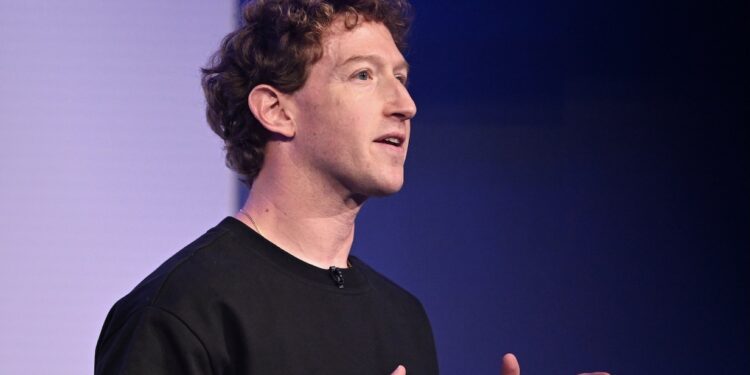
Meta CEO Mark Zuckerberg tried to draw a line under the company’s latest round of restructuring by telling employees there would be no more company-wide layoffs this year. But his message landed with a catch: it actually did not remove uncertainty, because Meta had already cut 10% of its global workforce, shifted about 7,000 employees into AI-focused roles, and closed another 6,000 open roles as part of the restructure plan.
Employees reacted with skepticism, especially to the wording around “company-wide” and “expect.”
[Also Read: Meta Chief Zuckerberg Says No More Company-Wide Layoffs This Year ]
Below is the full memo:
Hey everyone,
I want to express my gratitude to everyone leaving today for all of the hard work you’ve put into serving our community. It’s always sad to say goodbye to people who have contributed to our mission and to building this company. I feel the weight of that, and I’m spending a lot of time making sure we manage this as well as possible.
This is the most dynamic I have seen our industry. I’m optimistic about everything we’re building to give billions of people the power to express themselves and connect with the people they care about. I’m also optimistic about delivering personal superintelligence to everyone. We’ve always focused on putting power in people’s hands. This is how we believe progress is made in the world. These values are what makes us different, and they are why Meta has been successful. But success isn’t a given. AI is the most consequential technology of our lifetimes.
The companies that lead the way will define the next generation. We’re transforming our company to make sure it will always be the best place for talented people to have the greatest impact. People tell us that they appreciate the ability to take greater ownership and execute their vision with less bureaucracy and management to navigate.
At the same time, we also want to provide everyone with as much stability as possible. We won’t always get this balance right, but I care deeply about this so we’ll keep adjusting and work hard to do right by people along the way. To that end, I want to be clear that we do not expect other company-wide layoffs this year. I also want to acknowledge that we haven’t been as clear as we aspire to be in our communication, and that’s one area I want to make sure we improve. I’m confident in what we’re all building together.
We are one of the few companies positioned to help define the future. Meta has the talent, the infrastructure, the apps and distribution, and the business model. We have a lot of work ahead, but what’s on the other side is going to be extraordinary. Once again, I’m grateful to those leaving today.
And I’m grateful to everyone around the company for all of the historic work we will continue doing together.
Mark.
The memo, dated May 20, 2026, stated that Meta did not expect any further company-wide layoffs for the rest of the year. Zuckerberg also acknowledged that the company had not communicated as clearly as it should have and said that it would need to improve. The internal reaction was not relief so much as caution, because Meta employees read the statement as leaving room for smaller team-level cuts or further role changes.
[Also Read: Meta Reveals Details of May 20 Workforce Restructuring in Internal Memo ]
Across online discussions, many employees expressed concern that “everything not AI gets squeezed.” Others worried that reduced headcount would simply mean heavier workloads for the employees who remain.
Employees’ caution makes sense in the current context. Meta’s restructuring is part of a broader shift toward AI agents and AI workflows inside the company, and the changes affect roughly 20% of Meta’s workforce when layoffs and reassignments are counted together.
[Also Read: Meta Chief Zuckerberg Says No More Company-Wide Layoffs This Year ]
Why AI is changing the psychology of tech jobs
What is happening at Meta is a shift in how large tech companies are organizing work around AI. Jobs tied directly to AI infrastructure, agent systems and model deployment are becoming more central, while other roles feel less secure. That shift has changed how employees read every statement from management. Even a message meant to reassure can sound conditional when the entire company is being rebuilt around a new technical priority.
Business Insider reported that Zuckerberg’s latest memo followed weeks of uncertainty for staff who were waiting to learn whether they still had jobs. The same report said the reassurance could also be read as a way to refocus employees after a difficult stretch. That is the real psychological effect of the AI transition: workers are not just worried about cuts; they are trying to understand whether their function still belongs in the next version of the company.
Across the tech industry, AI-driven efficiency narratives are increasingly being linked to long-term workforce uncertainty. Employees are beginning to interpret AI restructuring not as temporary cost control, but as a structural shift in how companies manage headcount. Even Nvidia CEO Jensen Huang recently criticized executives who casually blame AI for layoffs, calling it a “lazy” explanation during a public discussion about workforce cuts in the industry. That comment resonated because it reflected growing discomfort around how AI is being used in corporate messaging.
[Also Read: Cisco to Cut About 4000 Jobs as AI-Focused Restructuring Accelerates ]
The wording mattered more than the memo
The phrase that kept coming up in reporting was “company-wide.” Employees focused on that wording and on the word “expect,” which is not the same as a firm guarantee. It means broad layoffs may pause, but team-based restructuring, performance-related exits or role transfers can still happen. That is why the memo sounded less like an endpoint and more like a narrower promise.
Meta’s handling of the layoff cycle also added to the tension. PeopleMatters reported that notifications were rolled out in multiple waves across time zones, with staff in Singapore, Europe and the United States receiving notices at different hours.
The main reality behind Meta’s memo
The larger reality is that Meta is still in a restructuring phase, not a recovery phase. The company is trying to fund heavy AI investment while also keeping its cost base under control. That means the workforce remains part of the adjustment. The company had already eliminated 8,000 jobs and moved 7,000 employees into AI work, while the Financial Times reported that Zuckerberg’s memo left room for potential team-specific cuts even if broad layoffs were ruled out for now.