SpaceX has agreed to acquire Anysphere, the company behind the AI coding platform Cursor, in a $60 billion all-stock deal expected to close in the third quarter of 2026. The transaction is intended to strengthen SpaceX’s enterprise AI position and help it close the gap with competitors including OpenAI and Anthropic. Cursor is widely used by software engineers and has become closely associated with “vibe coding,” the newer style of AI-assisted software development.
The valuation: a large price for a fast-growing AI product
Cursor had reached about $2.6 billion in annualized enterprise revenue by the time the deal was announced. On that basis, the $60 billion purchase price implies a multiple of roughly 23.1 times annualized revenue. That is a rich valuation, but it is also consistent with how aggressively some buyers are paying for AI products that already have real usage and revenue.
The SpaceX Cursor deal is an all-stock acquisition, with closing expected in Q3 2026. SpaceX had earlier secured an option tied to Cursor, which suggests the two companies had already been working through a staged path before the acquisition became definitive.
[ALSO READ: Salesforce to Acquire AI Agent Platform Fin for $3.6 Billion ]
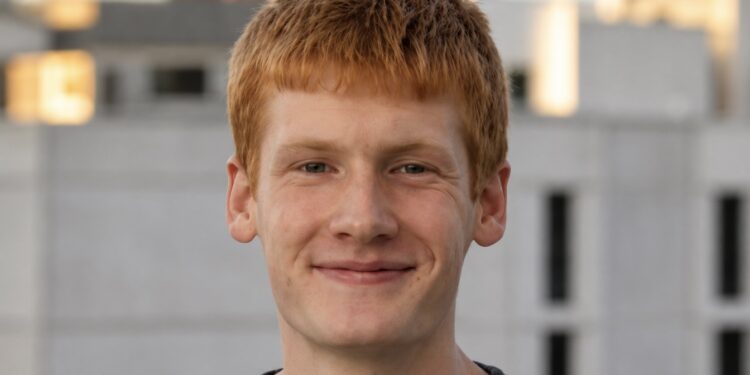
About Cursor CEO, Michael Truell
Michael Truell is the cofounder and CEO of Cursor. His personal site says he studied computer science and mathematics at MIT and is building Cursor “to advance useful AI.” Fortune reported that he interned at Google at 18, while still in his first year at MIT, which fits the broader picture of a founder who moved early from technical training into AI product building.
Cursor’s rise has been unusually fast; The company has gone from a student-founded project to one of the most closely watched AI software businesses in the market. Truell and his cofounders became billionaires after earlier funding rounds, underscoring how quickly the company’s value climbed before the SpaceX deal.
Cursor was founded in 2022 by four MIT classmates: Michael Truell, Aman Sanger, Arvid Lunnemark and Sualeh Asif. Accel lists all four as founders of Cursor. It is a founder-led product built by engineers for engineers, with a clear use case in day-to-day coding workflows.
[ALSO READ: Google Parent Alphabet Plans $80 Billion Raise to Power AI Expansion ]
Why is SpaceX buying a coding startup?
SpaceX is buying a product that sits inside the software development workflow. Cursor describes itself as a coding agent for building software, and the deal is meant to improve SpaceX’s enterprise AI capabilities and narrow the gap with rivals. SpaceX is not buying a random startup; it is buying a tool that already has developer adoption and enterprise traction.
If the next phase of AI competition is partly about who controls the interface where work happens, then coding is one of the most valuable interfaces available. Cursor is already embedded in software creation, which gives it data, usage, and product relevance. SpaceX appears to be buying that position rather than trying to recreate it from scratch. That is an inference from the deal terms and Cursor’s product role, not a quoted claim from either company.
Is $60 billion too much?
The $60 billion number is hard to ignore. On a revenue basis, though, the price is easier to frame. $2.6 billion annualized enterprise revenue figure, the acquisition price works out to about 23.1 times annualized revenue. For a mature software company, that would look extreme. For a fast-growing AI platform with strong customer adoption, it is the kind of valuation investors have already seen in several high-growth AI transactions.
SpaceX had already arranged the right to acquire Cursor or pay $10 billion to collaborate, which means this was not a surprise bid dropped from nowhere. The structure suggests the company had already decided Cursor was strategically important and was willing to pay a premium to lock it in.
[ALSO READ: Amazon, Nvidia, and SoftBank Power OpenAI’s Historic $110 billion Capital Raise ]
What this means for OpenAI, Anthropic and Google
The deal is designed to help SpaceX close the gap with OpenAI and Anthropic. It suggests the center of gravity in AI competition is moving away from model demos and toward real products that developers use every day.
SpaceX’s AI ambitions have been running behind competitors such as OpenAI and Google, which puts the Cursor deal in a broader race for developer workflows, coding assistance and enterprise adoption. AI competition is no longer only about who trains the largest model; it is also about who owns the software layer where engineers do the work.