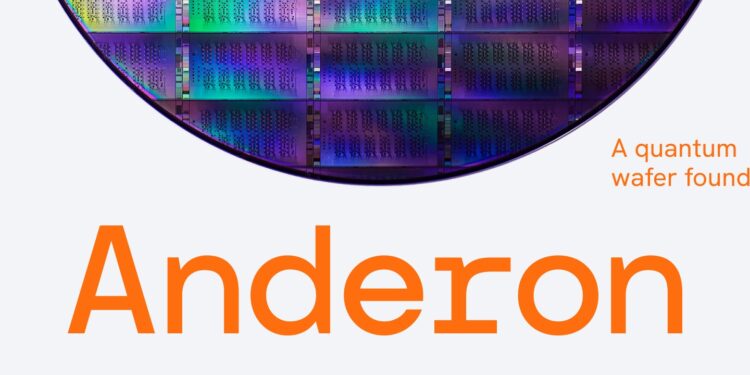
IBM and the U.S. Department of Commerce have signed a letter of intent to create Anderon, a new IBM company that will operate as a quantum chip foundry in Albany, New York. IBM says the project is backed by a proposed $1 billion CHIPS incentive from the Commerce Department, while IBM will add $1 billion in cash plus intellectual property, assets and staff. The package is part of a broader $2 billion U.S. push across nine quantum-computing companies.
IBM says Anderon will be the company’s first dedicated quantum chip manufacturing facility and will start with wafer fabrication for superconducting qubit and supporting electronics wafers before expanding into other quantum approaches.
[Also Read: IBM and MIT launch new research lab to merge AI and quantum computing in next phase of computing ]
What IBM is building
As per IBM, Anderon will be a standalone, state-of-the-art 300-millimeter quantum wafer foundry headquartered in Albany. The company describes the project as a manufacturing base that can supply wafer fabrication services to multiple quantum technology vendors, not just IBM itself.
IBM CEO Arvind Krishna said the new firm would offer its chipmaking technology to outside customers and was already in talks with potential clients.
The Trump administration is using CHIPS Act money to build domestic capability in a technology it sees as strategically important, and Commerce Secretary Howard Lutnick said the investments are intended to build U.S. industry and create high-paying jobs. Reuters noted that this follows a broader pattern of Washington taking equity positions in strategic industries, including Intel and MP Materials. The quantum move fits that same logic: the U.S. is treating quantum hardware as a supply-chain and national-security issue, not only a science project.
Quantum computing still has hard engineering problems. Major obstacles remain, including high error rates that limit practical performance. That is why the foundry angle matters: quantum progress is no longer only about algorithms and lab demonstrations, but about building repeatable manufacturing for chips that are difficult to produce at scale. Anderon will first support superconducting qubit wafers, with a goal of expanding to other modalities later.
[Also Read: The Quantum Inflection Point Is Already Here for India’s Cyber Landscape ]
Quantum foundry support is aimed at a field where commercial payoff is less certain, timelines are longer, and technical milestones are still moving. That makes the IBM deal more ambitious than a standard chip subsidy. It is a wager that the U.S. should build domestic quantum manufacturing before the market fully exists. Reuters also reported that shares of participating quantum companies rose between 6% and 31% after the announcement, showing how strongly investors read the news as a policy signal.