cxo voice
  • Business
  • Technology
    • Artificial Intelligence
    • Cloud
    • Telecom
    • Data Center
    • BPM
    • Blockchain
  • Finance
    • Banking
  • CXO Insights
  • Cyber Security
  • CXO Interviews
No Result
View All Result
  • Business
  • Technology
    • Artificial Intelligence
    • Cloud
    • Telecom
    • Data Center
    • BPM
    • Blockchain
  • Finance
    • Banking
  • CXO Insights
  • Cyber Security
  • CXO Interviews
No Result
View All Result
Leaders Talk and Latest Tech News | CXO VOICE
No Result
View All Result
Home Cyber Security

How do hackers gain access to your computer?

Common ways hackers gain access to your computer

Santosh Kumar by Santosh Kumar
August 9, 2024
How hackers access to computer

CXO VOICE

On June 17, 2024, a ransomware attack targeted Indonesia’s national data center, causing a huge data crisis in the country and disrupting more than 280 government agencies. Long queues were formed at immigration gates at Jakarta’s Soekarno-Hatta International Airport as systems were inaccessible because hackers had gained access to their computer system and disrupted normal processing. The attack was carried out using software developed by the Russian ransomware outfit LockBit. Hackers were demanding a $8 million ransom.

On November 23, 2022, the All India Institute of Medical Sciences (AIIMS) Delhi was hit by a ransomware attack; hackers allegedly demanded 200 crore INR (about $24.5 million) as ransom.

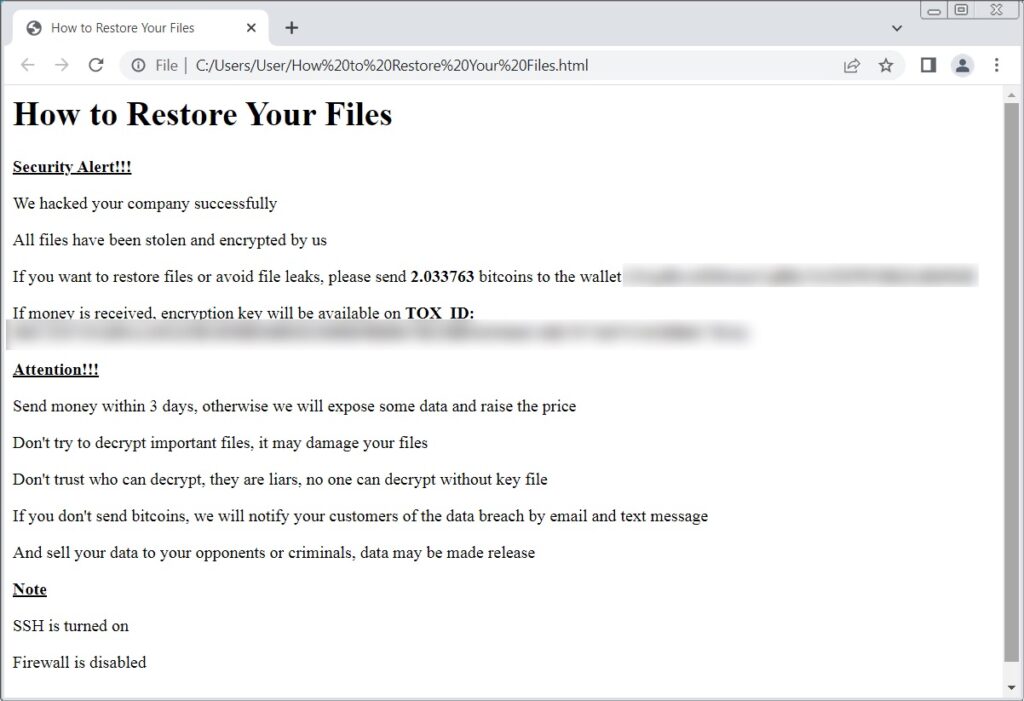
In February 2023, the ESXiArgs ransomware attack targeted VMware ESXi servers across the world through the RCE vulnerability in VMware ESXi servers. The hackers demanded 2BTC as ransom.
hackers gain access to your computer
ESXiArgs ransom note (Image Source: BleepingComputer)

Ransomware attacks are increasing continuously and pose a serious threat to corporate security and identity. A report by cybersecurity firm Sophos shows that hackers are weaponizing stolen data to pressure them for ransom who refuse to pay. They may threaten to publicize the CEO’s contact details or doxing the family members of the target company.

What is Ransomware

Ransomware is malicious software (malware) created and processed to block access to a whole computer system or some file/applications until the ransom is paid. 

Basically, hackers infect some files or applications on your systems and encrypt them, which blocks your access to the system or file. By encryption, they take command of your system. Critical applications, files, databases, or confidential data are their main targets while carrying out the attack.  

Then, they demand a ransom to provide the decryption key. If everything is okay, users can decrypt their files to gain access. However, there is no promise that your computer will run normally, as all these activities are carried out illegally.

Below are the few common ways hackers gain access to your computer

A CheckPoint study data shows that more than 90% of cyberattacks on businesses start from a malicious phishing email, and 75% of ransomware attacks are email-borne.

Phishing

Phishing is when hackers try to trick people by sending misleading emails, text messages, phone calls, or website links and asking them to share important data like login credentials, card details, and OTP or asking them to download some files secretly containing malware software.

Software Vulnerabilities

Hackers maliciously exploit software vulnerabilities or security flaws in your system or network to gain access to your computer system and install malware like spyware, ransomware, trojan horses, and worms or initiate a DoS attack.

Brute Force Attacks

Brute-force attacks are an effective technique for hackers to gain access to any computer system. In this method, hackers try to crack or guess login credentials passwords by systematically combing letters, numbers, and symbols until they find the correct one.

This is why banks, financial institutions, and other websites recommend using strong passwords and forcing users to change their passwords every three months.

Drive-By Downloads

By this method, hackers install malicious software on your computer without your knowledge; this may happen by accidentally clicking some malicious links or ads or coming in a bundle with third-party applications; this download happens without your consent.

An example: My friend was playing a game on his computer, and a full-screen ad appeared. He saw the ‘X’ button at the top right of the ad and clicked that to close the ad, but he was redirected to another website and then closed that. Within a few days, he noticed the system was not behaving properly; when the internet-connected, full of spam, random ads, popups, slow processing, heating, and auto restart were happening. He accidentally brought a Trojan into his computer system by clicking that ‘X’ button in that ad.

Drive-by downloads are developed mainly to hijack your device, spy on your activity, steal data and login credentials, or damage some files.

Ransomware variant

There are many ransomware variants, such as Ryuk, Maze, REvil (Sodinokibi), Lockbit, DearCry, and Lapsus$—each comes with unique characteristics and impacts.

Ransomware attacks on businesses have risen dramatically over the past few years. Hackers use sophisticated methods to gain computer and network access and demand ransom. Government and private organizations must remain vigilant and implement strong cybersecurity measures to mitigate the risk of being targeted by ransomware attacks.


Santosh Kumar

Santosh Kumar

Senior Writer at CXO VOICE. His email is [email protected]

Related Posts

public Wi-Fi
Cyber Security

The Hidden Dangers of Public Wi-Fi: Why Convenience Should Never Replace Caution

June 23, 2026
Wi-Fi Security
Cyber Security

Connected Everywhere, Vulnerable Anywhere: The Security Side of Wi-Fi

June 23, 2026
N-able Bengaluru
Cyber Security

N-able Opens New Global Capability Centre in Bengaluru

June 17, 2026
IBM Project Lightwell
Cyber Security

IBM and Red Hat Commit $5 Billion to Secure Open-Source Software as AI Raises Cybersecurity Risks

May 29, 2026
IBM project glasswing
Cyber Security

IBM Expands AI Security Portfolio as Project Glasswing Cyber Threat Concerns Grow

May 20, 2026
identity breaches
Cyber Security

Sophos says identity breaches are now a routine enterprise risk as AI expands the attack surface

May 13, 2026
Cyber Resilience Fabric
Cyber Security

Tech Mahindra partners with Cisco on Cyber Resilience Fabric for enterprise security operations

May 12, 2026
AI-Powered Cyberattacks
Cyber Security

AI-Powered Cyberattacks Pose Threat to Financial Markets, IMF Warns

May 8, 2026
Load More

More Articles

Kunal Shah

Meta Invests $900 Million in CRED, Appoints Kunal Shah as WhatsApp Global CEO

by Deepa Sharma
June 23, 2026

10 emerging technologies 2026

World Economic Forum Identifies 10 Emerging Technologies Poised to Shape the Next Five Years

by Deepa Sharma
June 23, 2026

public Wi-Fi

The Hidden Dangers of Public Wi-Fi: Why Convenience Should Never Replace Caution

by Atul Luthra
June 23, 2026

Wi-Fi Security

Connected Everywhere, Vulnerable Anywhere: The Security Side of Wi-Fi

by Govind Rammurthy
June 23, 2026

Get Weekly CXO Intelligence.

Loading

CXO Insights

public Wi-Fi
Cyber Security

The Hidden Dangers of Public Wi-Fi: Why Convenience Should Never Replace Caution

by Atul Luthra
June 23, 2026
Wi-Fi Security
Cyber Security

Connected Everywhere, Vulnerable Anywhere: The Security Side of Wi-Fi

by Govind Rammurthy
June 23, 2026
Shadow AI
Artificial Intelligence

Shadow AI: The Invisible Threat Growing Inside Modern Enterprises

by Manpreet Singh
June 5, 2026
traceability in Manufacturing
Opinion

From Barcode to Intelligence: How Traceability Is Redefining Manufacturing in India

by S R Srinivasan
May 29, 2026

CXO Interviews

AI Skills
Artificial Intelligence

How AI is transforming skills, education, and workforce development in the future of work

>
1Point1
Business

How 1Point1 Solutions Is Betting Its Future on AI to Redefine BPM

>
NewgenONE
Business

Reimagining Enterprise Transformation: Varun Goswami on the Future of NewgenONE and AI-Driven Automation

>
Jagat Shah, Chairman & CEO of MITSUMI Group
Business

Leadership in Emerging Markets: Exclusive Interview with Jagat Shah, Chairman & CEO of MITSUMI Distribution

>

CXOVoice.com is a leading online publication for CXOs, entrepreneurs, senior leaders, developers, and industry professionals. We publish informed analysis, news reporting, expert commentary, and expert insights across enterprise technology, digital transformation, cybersecurity, data, AI, sustainability, and governance.

Connect with us

Easy Links

  • Cryptocurrency
  • Company Announcements
  • Event
  • Blockchain
  • Resources & Downloads
Loading
  • Home
  • About Us
  • Contact Us
  • Advertise
  • Privacy & Policy
  • Editorial Policy
  • Feedback

Copyright © 2026 CXOVoice - All Rights Reserved

Welcome Back!

Login to your account below

Forgotten Password?

Retrieve your password

Please enter your username or email address to reset your password.

Log In

Add New Playlist

No Result
View All Result
  • Home
  • Business
  • Opinion
  • Interview
  • Technology
  • Cyber Security
  • Artificial Intelligence
  • How To
  • Data Center

Copyright © 2026 CXOVoice - All Rights Reserved