
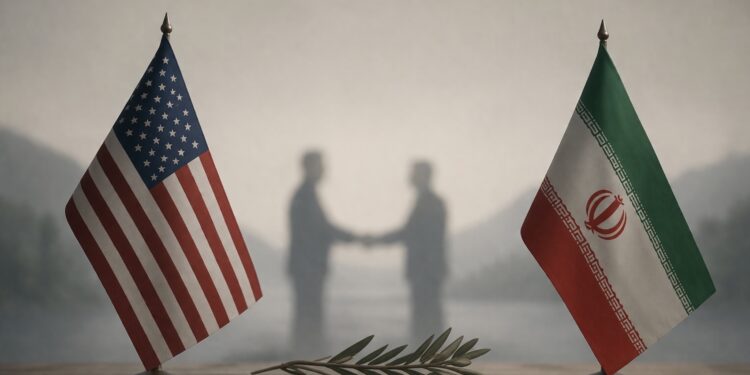
The United States and Iran have entered a two-week ceasefire after President Donald Trump said he would suspend bombing for 14 days, provided Tehran agreed to a full and immediate reopening of the Strait of Hormuz. Trump described the arrangement as a “double sided CEASEFIRE” and said Washington had received a 10 point proposal from Iran that he viewed as a basis for negotiations. Al Jazeera reported that talks to finalise a peace deal are due to begin in Islamabad on Friday.
Iran, however, has not framed the pause as a final settlement. According to Reuters, a senior Iranian official said Tehran wants an immediate halt to strikes, guarantees that attacks will not resume, and compensation for the damage. The same report said Iran rejects any ceasefire that is only temporary and wants a permanent peace deal instead.
The Strait of Hormuz is the main pressure point in the talks, Iran is seeking the right to charge ships passing through the strait, with fees varying by vessel, cargo, and conditions.
Iran’s 10 point demand for a permanent ceasefire
1. Non-aggression guarantee: The U.S. must commit to not attacking Iran in the future.
2. Iran retains control of the Strait of Hormuz: Iran keeps strategic control over the Strait of Hormuz, a critical oil route.
3. Reopening of the Strait (with conditions): The strait is reopened for global shipping, under Iranian oversight during the ceasefire.
4. Recognition of Iran’s nuclear program: Iran demands the right to continue uranium enrichment.
5. Lifting of all U.S. sanctions: Removal of both primary and secondary sanctions on Iran.
6. End to international sanctions frameworks: Termination of UN Security Council and IAEA resolutions targeting Iran.
7. Release of frozen Iranian assets: The U.S. must unfreeze Iranian funds held abroad.
8. Compensation for war damages: Iran seeks financial compensation for losses caused by the conflict.
9. Withdrawal of U.S. forces from the region: U.S. military presence in the Middle East should be reduced or ended.
10. Comprehensive ceasefire across all fronts: A full halt to hostilities, potentially including regional conflicts (e.g., Lebanon, Yemen).
Trump told AFP that the United States had won a “total and complete victory” after the ceasefire deal, and said the 10 point proposal from Iran was a “workable basis” for further talks. He also said any peace agreement would have to settle the issue of Iran’s nuclear material.
For now, the ceasefire has stopped the immediate fighting, leaders welcome it but the wider dispute is still unresolved. The core questions remain the same: who controls movement through the Strait of Hormuz, whether sanctions will be lifted, and whether both sides can move from a short pause in hostilities to a durable agreement.
[ Also Read: Ceasefire Effect: Oil Tumbles, Stocks Surge as US-Iran Confirmed Ceasefire Deal ]