Amazon has agreed to acquire Globalstar in a deal that expands its low Earth orbit satellite plans and adds direct-to-device, or D2D, capability to the Amazon Leo network. In the announcement, Amazon said the definitive merger agreement will give it Globalstar’s satellite operations, infrastructure, assets, and MSS spectrum licenses, while also extending Amazon’s satellite push beyond broadband into mobile-device connectivity. Reuters reported the transaction value at about $11.57 billion.
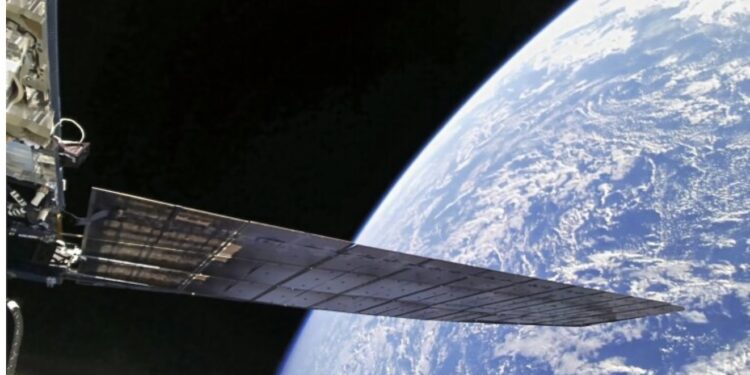
The core of the deal is strategic, Globalstar brings an existing mobile satellite services business and a working D2D foundation, while Amazon brings scale, capital, and a longer-term plan to build a much larger LEO network. Amazon said the combined structure will let Amazon Leo support consumers, enterprises, and government users in areas outside terrestrial network coverage, as well as in places where cellular service drops in and out. Globalstar’s network currently includes 24 satellites, and Amazon plans to use the acquisition to strengthen its position in the space-based connectivity market.
Amazon said Amazon Leo will begin deploying its own next-generation D2D satellite system in 2028, with support for voice, data, and messaging on mobile phones and other cellular devices. The company described the system as more spectrum-efficient than legacy direct-to-cell models and said it will integrate with its first- and second-generation Leo systems. This is meant to give Amazon a direct path into satellite-to-phone services, a category that is now drawing heavy investment across the telecom and satellite industries.
For Amazon, the deal also narrows a gap in its broader satellite program. Amazon plans to deploy around 3,200 satellites by 2029, with a mid-2026 deadline to activate part of the constellation to comply with regulatory obligations. That schedule matters because Amazon has lagged behind SpaceX’s Starlink in actual deployment scale, even though it has invested heavily in the project. Amazon has launched only a small fraction of the satellites it promised under its earlier plan, and that launch availability remains a bottleneck.
Starlink still dominates the market, and SpaceX has more than 10,000 satellites and about 9 million users. Amazon’s move does not close that gap immediately, but it does shift the company from a broadband-first satellite strategy toward a broader connectivity model that includes direct device access. That is a meaningful change because D2D services are seen as one of the fastest-growing areas in non-terrestrial communications.
Apple is another important part of the story, Amazon said it has reached a separate agreement with Apple to power satellite services for iPhone and Apple Watch, including Emergency SOS via satellite. Globalstar currently supports satellite features on recent iPhone models and Apple Watch Ultra 3 devices, and Amazon said it will continue that support while working with Apple on future services through the expanded Amazon Leo network. That means the deal is not only about Amazon’s own service roadmap; it also preserves a major consumer satellite feature already in use.
The acquisition shows that satellite connectivity is moving from a niche emergency feature into a more integrated telecom layer. Direct-to-device service is the key phrase here. Instead of depending only on towers, the handset can connect directly to satellites when it is outside normal coverage. The capability is especially useful for remote communications and emergency services, while Amazon framed it as part of a long-term vision for global coverage, “no matter where they are in the world.”
That vision also explains why Amazon is buying capabilities instead of building every part from scratch. Globalstar already has spectrum rights, a satellite business, and active consumer relationships. Amazon gets a faster route to market by combining those assets with its own platform and infrastructure. In satellite networks, timing matters as much as ownership. Once a competitor establishes hardware, licensing, and user relationships, catching up becomes harder than starting earlier.
The transaction will need approval from the U.S. Federal Communications Commission, and the broader Amazon satellite plan still has to meet deployment deadlines and launch requirements. That means the deal is a major step, not a completed rollout. The financial logic is visible, but the operational work remains substantial.
[Related Post: Amazon, Nvidia, and SoftBank Power OpenAI’s Historic $110 billion Capital Raise ]