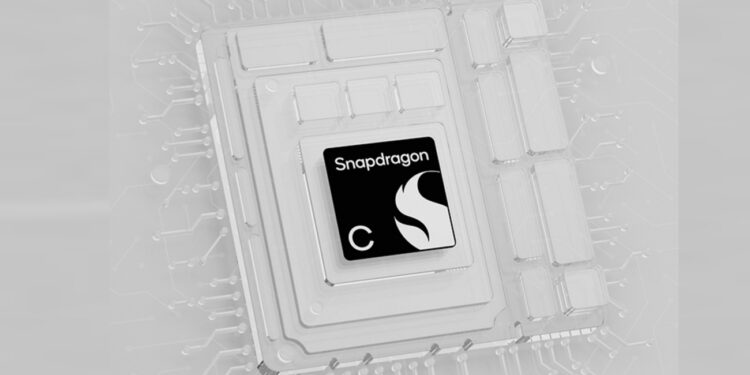
Qualcomm has moved its PC strategy further down the price ladder with Snapdragon C, a new entry-tier laptop platform. The chip is aimed at laptops starting at $300 and up, with a focus on students, families, and small businesses that need basic Windows computing without the cost and power draw of premium systems.
The budget laptop market has been stuck between low price and weak performance for years; Qualcomm is now trying to apply its low-power chip design to a segment that has usually been dominated by low-end x86 chips and inexpensive Chromebook-class systems.
Qualcomm said Snapdragon C is designed for entry-tier laptops and will support everyday use cases such as web browsing, video streaming, productivity, and video calls. The platform is a way to bring “modern personal computing” to a wider audience, while keeping battery life strong and fan noise low. Qualcomm named Acer, HP, and Lenovo as launch partners.
[Also Read: Intel Launches Core Ultra 200HX Plus Chips to Power Next-Gen Gaming Laptops ]
The first public example came from Acer, which showed an Aspire Go 15 powered by Snapdragon C. The model is a 15.6-inch laptop with up to 8GB of RAM, 512GB of storage, USB-C, HDMI, Wi-Fi 6E, and a 53Wh battery. Qualcomm said it will share more technical details in the coming months.
Why Qualcomm Is Moving Into This Segment
Qualcomm has spent the last few years building a stronger position in premium Windows-on-ARM systems, especially those marketed around AI and battery life. Snapdragon C suggests the company now wants scale, not just prestige. The entry-tier market is larger, less forgiving, and more sensitive to price, which means Qualcomm is trying to prove its architecture can work outside the high-end segment where it has gotten most of the attention so far.
That is also where the strategy gets interesting. According to The Verge, Snapdragon C uses older Kryo CPU cores rather than newer Oryon cores, which suggests Qualcomm is using a more cost-controlled design for this class of device. This is likely to keep chip costs down, but it also means the platform is not being positioned as a flagship AI PC part.
Qualcomm says Snapdragon C is engineered for “cool, quiet designs” and all-day battery life, while still supporting an integrated NPU for AI functions in the entry tier.
In the traditional low-cost laptop market, buyers often accept trade-offs in fan noise, battery life, and multitasking. Qualcomm is trying to narrow that gap by bringing mobile-style efficiency into a Windows laptop form factor. That is the real competitive claim, not the marketing language around it.
[Also Read: Qualcomm and Snap Sign Multi-Year Agreement to Power Specs with Snapdragon SoC ]
Global Context and Comparison
Compared with Qualcomm’s earlier PC push, Snapdragon C is a clear step toward broader coverage. The company’s recent laptop chips have focused on higher-end systems with stronger AI positioning, while this release is aimed at mainstream buyers who care more about battery life and practicality than headline specifications. In that sense, Snapdragon C is less about a new category and more about widening the addressable market.
A premium AI laptop can justify a higher price with stronger performance and advanced features. An entry-tier device has a different job: run reliably, last longer on battery, and stay affordable. Qualcomm is signaling that it wants Snapdragon to compete in both rooms, not just the top one.