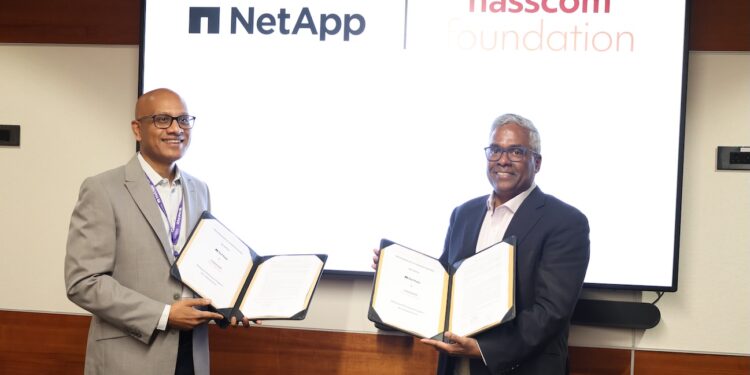
NetApp, a leading company in Intelligent Data Infrastructure, today announced a long-term partnership with the Nasscom Foundation to start an AI and Data Science skills program. The launch event took place in Bengaluru, with George Kurian, CEO of NetApp, and Rostow Ravanan, Chairperson of the Nasscom Foundation, in attendance.
This program will teach important skills in Data Science and Artificial Intelligence, which are in high demand. In the first stage, engineering graduates from less privileged areas in Karnataka and Delhi will join the program. They will follow a full curriculum that combines technical knowledge, job skills, and experience with real companies.
Vasanthi Ramesh, Vice President of Engineering and Site Leader at NetApp India, said, “We are working together to develop courses that match what the digital economy needs. This will help build more AI talent and make the Nasscom Foundation’s skills training even stronger.”
People in the program will complete 120 hours of training in technical subjects like Python, data analytics, machine learning, and deep learning. NetApp will also provide extra classes on topics such as Kubernetes, persistent storage, and AI infrastructure. In addition, there will be 60 hours of soft skills training, which includes communication, teamwork, and advice for building a career. The program aims to help graduates find jobs, with industry certificates and job placement support. The goal is to help about 70 per cent of the students get technology jobs.
Rostow Ravanan, Chairperson of the Nasscom Foundation, said, “There is a bigger need for people with AI and Data Science skills, and this is changing how we work. To keep up with these changes, we must give everyone, no matter their background, a fair chance to learn the latest skills. Our work with NetApp supports this goal. We are helping young people, especially women from less privileged communities, gain the digital, AI, and data skills they need to succeed in the future.”
Also Read: AI in Hiring: Separating the Hype from Real-World Use Cases