Shunya Labs, a research-driven voice AI company, unveiled Zero Codeswitch, a speech recognition foundation model purpose-built to decode how Indians actually speak in naturally code-mixed and multilingual conversations, addressing a longstanding technical gap in voice artificial intelligence for the country’s diverse linguistic environment.
The announcement, made by the Gurugram-based startup, reflects an industry benchmark in automatic speech recognition (ASR), with the model achieving a 3.10 percent Word Error Rate (WER) on the OpenASR leaderboard. According to company statements, Zero Codeswitch is engineered to run efficiently on standard CPUs, reducing deployment costs by up to 20x while maintaining sub-100ms latency for real-time applications.
In India’s everyday conversations, people routinely mix languages, use transliteration, colloquial expressions, and informal grammar. Zero Codeswitch to process mixed-language speech natively, generating code-mixed tokens that mirror real human language use, for instance, transcribing phrases like “Mujhe account balance dekhna hai” without translation to a dominant language first.
The model is optimized for Hinglish and code-mixed speech while being part of a broader Shunya Labs platform that supports more than 200 languages, including over 40 Indian languages.
The company expects Zero Codeswitch to serve as core infrastructure for voice-based applications across sectors such as fintech, healthcare, and government services, particularly in regions where English proficiency is limited, and voice remains the most practical digital interface.
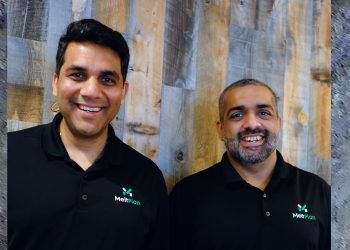
Ritu Mehrotra, CEO and Co-Founder of Shunya Labs, said: ” With Zero Codeswitch, we are building foundational technology for Indian languages that prioritizes accuracy, latency, and real-world usability. Our goal is not just to adopt AI, but to build it at the foundation level in India.”
Sourav Bandyopadhyay, CTO and Co-Founder of Shunya Labs, said: ” With Zero Codeswitch, we are creating an intelligence layer that truly listens: engineered for India’s linguistic diversity and optimized for real-world deployment.”
Also Read: Generative AI vs. Agentic AI: The Next Big Leap in Enterprise Automation