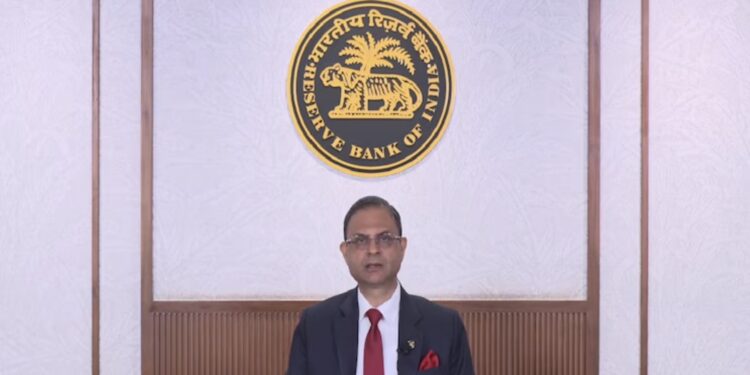
Reserve Bank of India’s Monetary Policy Committee (MPC) meeting on February 6, 2026, was less about surprise and more about signalling discipline. The MPC voted to keep the policy repo rate unchanged at 5.25%. Experts share their views on why the central bank chose a pause during its first policy meeting in 2026.
Ajay Kumar Srivastava, Managing Director & CEO, Indian Overseas Bank
“The RBI’s decision to maintain the policy rate while continuing with a neutral stance reflects a balanced approach amid evolving global and domestic conditions. With inflation remaining benign, the policy framework provides stability and adequate headroom to support growth while preserving macroeconomic discipline.
The central bank’s confidence in India’s growth outlook underlines the resilience of domestic demand and the effectiveness of recent policy measures. We also welcome the RBI’s continued emphasis on strengthening the financial ecosystem through customer protection, improved liquidity management, and enhanced credit flow to MSMEs, alongside steps to deepen financial markets. At Indian Overseas Bank, we view this stance as supportive of sustainable growth and remain focused on responsible credit delivery and customer-centric banking.”
Shaji Varghese, Chief Executive Officer, Muthoot FinCorp Ltd.
“We had highlighted in our pre-Budget expectations that branch licensing norms needed to be liberalised, as this would significantly improve last-mile credit delivery. It is therefore encouraging to see movement in this direction from the regulators. NBFCs are in a strong position to serve customers at the bottom of the pyramid because of their deep reach, strong local connections, and increasing use of technology. For many people who are still outside the formal banking system, access still depends on proximity and trust, and branch presence plays a critical role in enabling that.
This ease in regulation will now help bring more individuals and SMEs into the formal financial system, which is one of the key priorities for the country. At the end of the day, what is good for the nation is good for the sector and, most importantly, good for the people. Measures that liberalise branch expansion and enable responsible NBFCs to grow will go a long way in strengthening financial inclusion and supporting inclusive economic growth for a Viksit Bharat.”
In the aftermath of the February 6, 2026, policy meeting, the most common question in markets is when the next rate cut might come. The RBI has clearly shifted from an emergency-style easing mindset to a calibration phase, where policy decisions are spaced out and heavily data-dependent. The Monetary Policy Committee’s retention of a neutral stance is the biggest clue.
RBI intends to enhance credit access for micro, small and medium enterprises (MSMEs). By proposing an increase in collateral-free loan limits, the central bank reinforced its view that targeted credit support.
Governor Sanjay Malhotra’s commentary carried a familiar but firm undertone: India remains well-positioned amid mounting global uncertainty. On the international front, he observed that global growth is projected to exceed earlier estimates in 2026, aided by technology-led investments, accommodative financial conditions, and substantial fiscal stimulus. Yet he cautioned that escalating geopolitical tensions and intensifying trade disputes threaten to destabilise the prevailing world economic order.
Also Read: Company Executives Reactions to Union Budget 2026