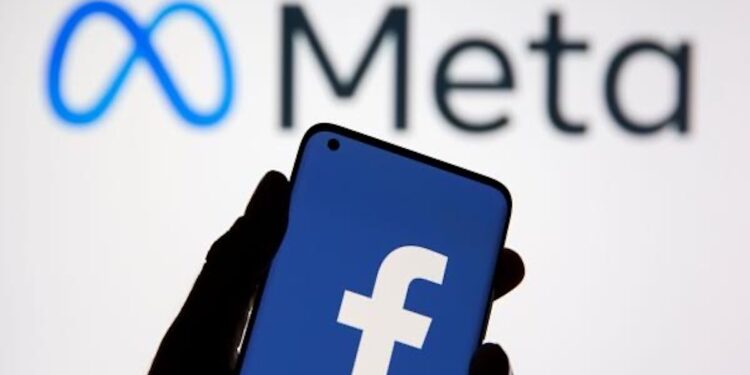
Meta has acquired AI startup Manus for more than $2 billion, according to people familiar with the transaction. The acquisition, one of Meta’s largest AI-focused deals to date, signals an intensification of CEO Mark Zuckerberg’s push to secure proprietary technology and talent as Big Tech races to define the next phase of AI development.
While Meta has not disclosed full financial terms, industry estimates place the purchase price well north of $2 billion, reflecting both Manus’s rapid technical progress and the fierce competition among platform giants to lock in differentiated AI capabilities.
Manus, a Singapore-based AI agent startup founded by Chinese entrepreneur Xiao Hong in 2022, the company has earned a reputation for advanced work in autonomous reasoning systems, agent-based AI, and large-model orchestration, areas increasingly viewed as critical to moving beyond chatbots toward systems that can plan, execute, and adapt across complex tasks.
For Meta, the acquisition of Manus is less about short-term product integration and more about long-horizon control of core AI primitives. As one senior industry executive put it, “Models are becoming commodities. The real edge is in systems that use models intelligently.”
Why Manus Matters to Meta
Meta has spent billions building its AI infrastructure, from custom silicon to massive data centre investments, while open-sourcing much of its foundational work through the Llama model family.
From a research standpoint, Manus strengthens Meta in three critical ways:
- Advanced AI Agents
Manus has focused on AI systems capable of multi-step reasoning and autonomous decision-making capabilities. - Talent Density
Manus’s engineering and research team is expected to be integrated into Meta’s core AI group, bolstering efforts across generative AI, mixed reality, and intelligent assistants. - Platform Leverage
With billions of users across its apps, Meta is uniquely positioned to deploy agentic AI at scale. Manus’s technology provides a bridge between experimental research and mass deployment.
The deal comes amid an unprecedented wave of AI consolidation. Rivals, including Google, Microsoft, OpenAI partners, Amazon, and Nvidia-linked ecosystems, are all racing to secure scarce AI expertise and defensible technologies.
For Meta, the alternative would be to risk dependence on external AI platforms or to watch competitors integrate similar capabilities first. Acquiring Manus short-circuits both risks.
In the near term, users are unlikely to notice immediate changes from the Manus acquisition. The real impact will unfold quietly—inside Meta’s AI research roadmap, product planning, and long-term bets on digital assistants, creator tools, enterprise AI, and immersive experiences.
With this deal, Meta is sending a clear message: it does not intend to be merely a distributor of AI created elsewhere. It intends to own the intelligence layer outright, even if that requires writing multibillion-dollar checks for companies most people have never heard of.
Also Read: 5 Future-Ready Skills Every Storage Engineer Should Build in 2026