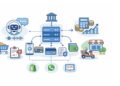
What is a multi-cloud
Multi-cloud = deliberate use of two or more distinct cloud service providers (public or private) to host different workloads and services, chosen for technical fit, cost, compliance, or resiliency reasons. Strategic multi-cloud is intentional: workloads are mapped to the cloud that best serves their constraints. The simple definition used by Google Cloud captures this: multicloud means composing services from multiple vendors rather than riding a single provider’s full stack.
Benefits of a multi-cloud strategy
Multi-cloud buys you choice: different providers have differentiated capabilities in AI, analytics, global presence or enterprise integrations, and using multiple clouds lets you take the best-fit service for each job instead of compromising for a single provider’s weakest areas. Multi-cloud can materially improve resilience by reducing single-vendor outage exposure and support data residency requirements by placing workloads in regions or clouds that satisfy local law. It also creates a lever for procurement and cost arbitration; if you manage it with discipline, multi-cloud opens FinOps opportunities. At the same time, vendors and industry analyses remind us that these advantages only materialise when you pair the technical design with a clear operating model; otherwise, you get service sprawl and wasted spend.
When multi-cloud is the right choice
Choose multi-cloud for real, measurable reasons: when a workload requires a provider-specific capability (for example, a specialised managed AI service or a tight enterprise SaaS integration), when regulations force data to stay in certain jurisdictions, or when you need provider diversity for resilience of critical systems. Do not choose it as a vague “escape hatch” against vendor lock-in; that rationale costs money and increases operational risk unless backed by measurable KPIs (recovery targets, cost thresholds, performance gains). Analysts have flagged that many organisations adopt multicloud without outcomes and later miss expectations. Be explicit about the business problem you expect to solve before you start.
How to implement a practical multi-cloud strategy
Start from clarity, not technology. In week one, run a short executive workshop to agree on measurable outcomes: what SLA improvement, compliance coverage, cost delta or time-to-market gain justifies the program. Once outcomes are set, inventory your landscape: collect the biggest data stores, latency-sensitive services, compliance-constrained data, and any vendor-tethered integrations. Classify each workload by data gravity, recovery objective, regulatory needs and integration surface so you can make decisions workload by workload.
With those decision drivers in hand, build a minimal, opinionated platform runway. This runway contains repeatable IaC modules, a CI/CD template that can target multiple providers, and a single sign-on/federated identity approach so teams can move between consoles without an identity gap. Don’t try to abstract every cloud capability immediately; pick an orchestration layer you trust (Kubernetes and Terraform are common, but remember managed DBs and serverless don’t map 1:1). Stand up centralised telemetry ingestion (OpenTelemetry collectors or an aggregator) so you can see cross-cloud behaviour from day zero.
In parallel, design your networking and data strategy. Minimise synchronous cross-cloud transfers: co-locate hot data, use event streams and asynchronous replication for cross-cloud flows, and pressure-test egress assumptions against realistic datasets. Put FinOps guardrails in place immediately: enforced tags, budget alerts, and automation to shut down non-production resources. Finally, pilot with one or two non-critical workloads, capture actual metrics (latency, cost, operational effort), run a few game days for incident response, and iterate. Industry reports show cost management and operational fragmentation are the usual sticking points. Treating FinOps and the platform as first-class parts of the program reduces those risks.
Common pain points and fixes

When you get your first pilot running, three things usually bite: unexpected egress bills, unclear ownership during incidents, and observability blind spots. I’ll explain each and show what I recommend you do first.
Egress and data gravity show up as sudden, outsized bills when a service that reads terabytes from Cloud A starts writing results to Cloud B. The pragmatic fix is twofold: (1) redesign to minimise synchronous cross-cloud traffic, process data where it lives or use streaming/edge caches, and (2) enforce cost observability with real-time egress alarms and per-workload chargeback so owners get immediate feedback. Treat egress as a first-class design constraint, not an afterthought.
When an incident spans clouds, teams bicker over ownership and escalation. Solve that by mapping service call paths to explicit owners before production. Create simple runbooks that say “if X fails, call Y” and run them on game days. Practice beats theory: once, during a cross-cloud outage, a pre-defined escalation path shaved hours off recovery because everyone knew who owned which network hop.
Observability gaps are common: traces start in one cloud and disappear in another. Use vendor-agnostic tracing standards (OpenTelemetry) and an aggregator so every span and metric funnels into a central view. Instrument request IDs at the edge and include them in logs across providers; that single ID will save you hours in a cross-cloud postmortem.
Real challenges, issues and barriers you must acknowledge
There is no sugarcoating the hard realities. First, organisational skills: your teams will need cross-cloud operational expertise, or you’ll accumulate technical debt fast. Engineers specialise; expect a learning curve that costs velocity unless you invest in the platform and training. Second, policy and compliance complexity: multiple consoles mean multiple IAM models, multiple audit trails and a greater chance of misconfiguration. Automate policy with “policy as code” and CI gates, but plan for translation work when a policy needs to map to provider-specific primitives. Third, vendor economics: egress, data transfer and managed service pricing models vary wildly, and simple comparisons can be misleading. Run real workloads in short pilots to validate financial assumptions; spreadsheets alone lie. Fourth, tool sprawl: every cloud has its tools, and if you let each team pick their own observability, security scanner or IaC approach, you’ll fragment operations. Centralise core capabilities in a platform team and let individual teams focus on product differentiation. Industry research repeatedly shows cost control and operational fragmentation are the top risks to multicloud success; assume you will face them and fund the mitigations.
If I were starting the program this week, I would run a two-day workload mapping workshop, produce one-page decision sheets that say “run here / don’t run here / why / rollback,” stand up a single Terraform module + CI template and a basic OpenTelemetry collector pipeline, and assign a FinOps owner with immediate budget alerts on pilot workloads. Then I’d run two game days (network fail and provider outage) to exercise runbooks and ensure teams know escalation boundaries. Those modest investments buy you disproportionate clarity; they force workload-level decisions that either justify multi-cloud or show you where single-cloud is the smarter, simpler answer.