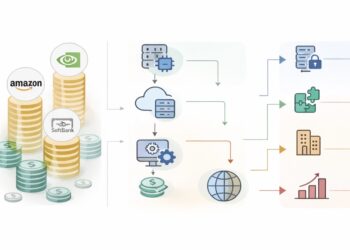
The global technology landscape is entering a new phase where generative artificial intelligence (AI) and data sovereignty are reshaping infrastructure strategy and spending, according to Gartner. The firm forecasts that worldwide sovereign cloud Infrastructure-as-a-Service (IaaS) spending will reach approximately $80 billion in 2026, 35.6 % year-over-year increase from 2025.
For decades, enterprise and public sector cloud adoption has been driven by efficiency, scalability, and the rise of hyperscale footprints. Today, however, the architecture required to support AI at scale and continuous model training is creating demand for localised, sovereign infrastructure where jurisdictional control, data residency, and regulatory compliance are central priorities.
“Organizations outside the U.S. and China are investing more in sovereign cloud IaaS to gain digital and technological independence,” said Rene Buest, Senior Director Analyst at Gartner. Governments remain the principal buyers, followed by sectors such as energy, utilities, and telecommunications, where sovereign requirements are integral to operations and trust.
According to Gartner’s forecast, Europe is set to surpass North America in sovereign cloud IaaS spending in 2027. Emerging markets in the Middle East, Africa, and Asia/Pacific are also seeing rapid growth. Middle East and Africa (89%), Mature Asia/Pacific (87%) and Europe (83%) are projected to record the highest growth in sovereign cloud IaaS spending in 2026.
While China and North America are forecast to be No 1 and No 2 in spending in 2026 at $47 billion and $16 billion, respectively, growth for both will be in the 20 per cent range.
What “Sovereign Cloud” Means in the Age of AI
Sovereign cloud extends beyond traditional data center and cloud services. It represents a cloud architecture designed under local governance, operational control, and data custodianship.
According to IBM’s 2025 CEO Study, digital sovereignty is a strategic priority for both enterprises and governments. Majority of executives surveyed believe AI will positively impact revenue by 2030, but only if they can maintain full control over data, infrastructure, and governance.
IBM’s recent Sovereign Core announcement underscores how major technology firms are responding to this shift. The platform embeds sovereignty controls directly into cloud and AI operations, from identity management to encrypted jurisdictional audit trails, helping organisations meet complex compliance requirements while supporting AI workloads under their direct control.
Industry Perspectives: AI and Cloud are Converging
Executives from major IT services firms and cloud integrators confirm this broader momentum. Infosys’ leadership — one of the world’s largest technology consulting firms — has publicly highlighted how AI and cloud are no longer separate initiatives but increasingly integrated levers of business transformation. The Infosys CEO noted that helping clients capture measurable business value from AI requires deep expertise in data engineering, workflow integration, and scalable infrastructure.
Infosys’ frameworks, such as AI for Infrastructure and sovereign-focused cloud enablement platforms, are designed to handle not only AI-driven automation and hybrid cloud operations, but also the governance and compliance aspects that sovereign deployments mandate.
As AI systems move from experimental to enterprise-wide, production-scale deployments, the conversation has shifted. This evolution is driving an era of strategic cloud investment that is both AI-centric and sovereignty-aware, reshaping the global technology landscape.