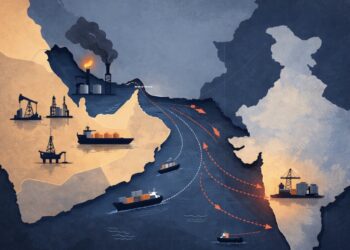

Brent crude oil has moved back above $100 a barrel, reserves are being drawn at an unprecedented scale, shipping and insurance costs have spiked, and knock-on shortages (including helium and critical components) are already cascading into tech supply chains.
Few Updates
- Brent futures touched ≈ $100-$101 / bbl in recent trading.
- The International Energy Agency authorised a 400 million-barrel coordinated release from member reserves; the United States will supply 172 million barrels of that release.
- The IEA estimates a drop of ~8 million barrels per day of oil supply in March because of disrupted Persian Gulf exports.
- Maritime war-risk/hull insurance premiums and war cover have surged (reports of >10x increases in some narrow-zone cases; hull war premiums rising from ~0.25% to as high as 3% of vessel value in the worst exposures). Roughly hundreds to millions of dollars extra per voyage for tankers is now routine in the high-risk Gulf.
- Shipping and air freight have been rerouted/blocked; air cargo on some routes has jumped as much as ~70% on key lanes, and thousands of containers/ships are delayed around the Gulf chokepoints.
- Critical industrial gas supply is already hit: a Qatar LNG halt and processing disruptions have doubled spot helium prices and removed an estimated ~5.2 million cubic meters/month of helium capacity from the market, material for semiconductor fabs and medical imaging.
The transit chokepoint
The immediate trigger is concentrated naval/air conflict between the US, Israel, and Iran around the Strait of Hormuz and attacks on tankers and terminals that cut Gulf export throughput. The IEA now calls this the largest oil-supply disruption in history, a claim backed by its March supply estimates showing an ~8 mb/d shortfall versus prior months. That is the metric that pushed markets to react and policymakers to release strategic oil.
Impacts on technology supply chains
- Semiconductor fabs, helium and feedstock risks.
- Helium prices have doubled after Qatar’s partial LNG/processing halt; Qatar contributes a large share of global helium throughput. Helium is a non-substitutable process gas for many chip fabs (leak detection, cryogenics, etch processes). Shortages or higher spot prices materially raise fab operating costs and risk production slowdowns.
- Hardware logistics
- Both sea and air routes through/near the Gulf are disrupted. Air freight rates up ~70% on some routes; marine war-risk premiums have spiked to the point that shippers reroute or delay, increasing lead times and landed cost unpredictability. For hardware OEMs and cloud providers that rely on tight JIT inventory, that means either larger buffer stocks or acceptance of component delays and higher logistics spend.
- Data centers & cloud, power cost and site risk.
- Natural gas and LNG flows have been interrupted in parts of the Middle East, pushing local energy prices and raising contingency spending for fuel-backed generation. Cloud operators with infrastructure or peering in the Gulf region are reporting heightened political-violence insurance and some temporary service reroutes; brokers report political-violence cover can cost 4-5x prior levels for vulnerable assets. That raises the marginal cost of running and insuring edge infrastructure in the region.
- Software & services, cost inflation hits customers.
- Elevated transport and energy costs are already feeding into higher input costs for device OEMs, telcos, and logistics; SaaS/Platform providers selling to verticals (manufacturing, logistics, video streaming) will see downstream customer pressure and potential demand softening. (This is a logical combination of the supply indicators above and market price moves.)
What to watch next
- Reopening of the Strait of Hormuz, if throughput normalises, prices and insurance costs should fall; if it stays constrained, scenario risk is very high.
- IEA / SPR release flow rates and arrival schedules, market impact depends on how quickly the 400m (IEA) and 172m (US) barrels hit refining networks. Expect a 2-6 week lag before the full effect is visible in supply curves.
- Shipping insurance market signals, if major underwriters withdraw, routing and freight economics will restructure global lanes, increasing landed cost and lead times for technology hardware.
- Helium & critical gas shipment notices, fabs will publish force majeure or allocation updates; any new force majeure from a major helium or LNG producer should be treated as high risk for fabs worldwide.
Why tech readers should care
This is not just an energy story. It’s an infrastructure shock that intersects hardware manufacturing (helium and metals), logistics (war-risk premiums and air/sea re-routing), and operating costs for cloud and edge infrastructure (higher fuel and insurance). The latest, verifiable data show oil back above $100, record-scale reserve releases (400m IEA; 172m US), an ~8 mb/d March shortfall estimate, double-digit and sometimes extreme increases in freight and insurance, and immediate shortages in helium that affect chip fabs. For engineers, procurement leads and CTOs, that translates into higher OPEX, longer procurement cycles, and concrete risks to capacity, all measurable and actionable.