
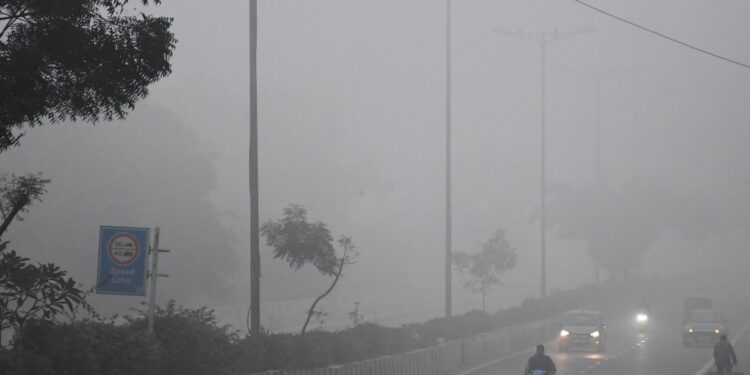
Rajkumar Bafna, President of Finance at Akums Drugs and Pharmaceuticals Ltd, has stepped down, citing Delhi’s hazardous air pollution as his main reason. Resignations for this reason are uncommon and show how environmental health is affecting corporate life in the city.
Rajkumar Bafna submitted his resignation on December 3, 2025, in an internal communication to CFO Sumeet Sood. He wrote: “Due to the Delhi pollution level, I am resigning from my position as President of Finance. Kindly relieve me as soon as possible.” The company confirmed his resignation in a regulatory filing, accepting it on December 12. His last day will be December 31, 2025.
Company officials said they were sorry to see Bafna leave but understood that his health concerns left them no choice. The CFO wrote, “Though we regret your decision, given your health issue, we will not be able to persuade you.” This shows that health and well-being are now key factors, even for senior executives.
An Unusual Corporate Exit Linked to Environmental Health
Most employees leave their jobs for reasons like career moves, company changes, personal matters, performance, or disagreements. Bafna’s resignation is rare because he clearly pointed to Delhi’s air pollution as the reason for his resignation. His decision is more than just an HR matter; it is a public statement about Delhi’s air quality crisis.
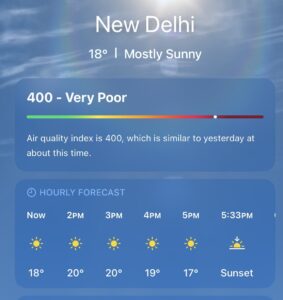
Delhi’s air quality has gotten much worse in recent weeks. The Air Quality Index (AQI) has often reached very poor, severe, and hazardous levels during the winter. AQI is 400, which is a serious health risk even for healthy adults.
Health experts warn that being exposed to this level of pollution for a long time can make respiratory and heart problems worse, along with other long-term health issues. Fine particles called PM2.5, which are a big part of Delhi’s smog, go deep into the lungs and can cause asthma, bronchitis, and lasting lung damage, especially in people who are more at risk.
Pollution and Daily Life in Delhi
Delhi’s pollution has been a problem for a long time, but recent weather—like low wind, thick fog, and temperature changes—has made it worse by keeping pollutants close to the ground. Seasonal issues such as crop burning, more vehicle emissions, and industrial work have also pushed AQI levels into the most dangerous range in the past month.
People living and working in Delhi are often told to stay indoors, use air purifiers, and wear masks outside. For many, including professionals like Rajkumar Bafna, Delhi pollution is now more than just a hassle; it affects where and how they live and work.
This event could be a wake-up call that environmental health is a real risk to employee well-being, retention, and company stability. For policymakers and citizens, it is a clear sign that air quality is both a public health and economic problem that needs ongoing, serious action.
Also Read: The Home Router Crisis of 2026: How India’s Living Rooms Became the New Cyberwar Frontline