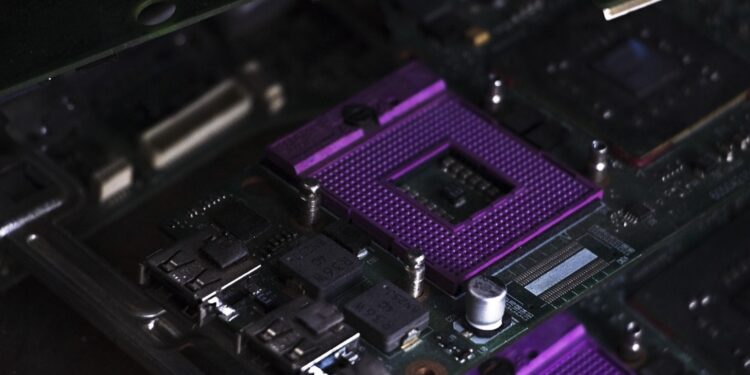
India’s artificial intelligence infrastructure ambitions took a concrete step forward this week as Tata Consultancy Services (TCS) and Advanced Micro Devices (AMD) announced plans to introduce AMD’s “Helios” rack-scale AI architecture into the country, alongside a blueprint for up to 200 megawatts (MW) of AI-ready data center capacity.
The announcement, made in a joint press statement, expands an existing relationship between the two companies and focuses squarely on high-performance computing infrastructure rather than software services. At its core, the initiative aims to deploy AMD’s latest data center silicon within an integrated, rack-level architecture designed for large-scale AI model training and inference workloads.
Helios is engineered to meet the increasing compute demands of modern AI workloads. The architecture also relies on AMD’s open ROCm software stack, which supports AI and machine learning frameworks. While the companies did not publish performance benchmarks specific to the India deployment, these components are positioned for enterprise AI and high-performance computing environments globally.
TCS will implement the infrastructure locally through its subsidiary, HyperVault AI Data Center Limited, which was established to design and operate secure, high-performance AI data platforms. The two companies said the blueprint envisions AI-ready data center capacity scaling up to 200 MW.
To put that into context, a 200 MW facility is firmly in the hyperscale category. Traditional data centers typically operate at a fraction of that capacity, often below 20 MW. Even among hyperscale operators, campuses ranging between 50 MW and 100 MW are more common.
Demand for AI compute is rising across sectors, including financial services, healthcare, manufacturing, and public administration. At the same time, there has been increasing policy emphasis on sovereign AI capability—ensuring that large-scale model development and data processing can occur within national borders and under local control.
In statements accompanying the announcement, TCS Chief Executive Officer K. Krithivasan described the collaboration as a way to combine AMD’s silicon and systems architecture with TCS’s infrastructure engineering and enterprise integration capabilities.
AMD Chair and CEO Dr. Lisa Su pointed to a wider industry transition: organizations are moving beyond AI experimentation toward production-scale deployments, creating demand for more efficient, scalable compute platforms.
The companies have not disclosed a deployment timeline, specific data center locations, capital expenditure figures, or anchor customers. Nor have they detailed how the 200 MW capacity will be phased, whether as a single campus or as distributed facilities.
What is evident is that India’s AI conversation is shifting from proof-of-concept pilots to infrastructure scale. In that shift, silicon, power, and data center design matter as much as algorithms, and this partnership squarely addresses those fundamentals.
Also Read: 5 Reasons HDDs Will Continue to Dominate Enterprise Storage in the AI Era