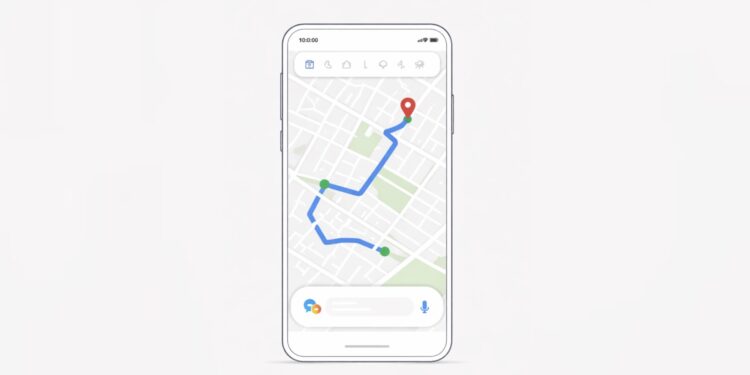
Google Maps has been augmented with a Gemini-powered conversational assistant called Ask Maps, plus an overhauled “Immersive Navigation” driving mode. The company describes Ask Maps as a natural-language interface that can answer multi-part location queries, assemble trip itineraries, and combine local data (reviews, photos, operating hours) into context-aware recommendations; Immersive Navigation brings richer 3-D visuals, lane-level cues and more natural voice guidance for driving.
Instead of typing separate searches and scanning lists, Google Maps user can ask a single, compound question, for example, “Plan a scenic one-day drive from Pune that stops at a good local breakfast place, two viewpoints and a quick EV charging stop”, and receive a suggested route, estimated times, and place cards that reflect crowding, amenities and photos. The assistant can surface trade-offs between alternate routes (tolls vs. traffic), preview Street View for confusing intersections, and provide answers while you’re navigating (voice queries while driving or walking). The feature is being rolled out initially on mobile in selected markets.
Basic voice and context features are not new; apps such as Waze have long supported voice reporting and dynamic routing based on crowd signals, but none of the mainstream competitors currently offers a first-party, Gemini-style conversational planner embedded directly into an everyday mapping UI at this scale. Waze’s conversational reporting improves safety and quick reports, and Apple has been incrementally improving Siri and its on-device intelligence, but those efforts have not (yet) produced an Apple Maps experience that mirrors Ask Maps’ combination of generative dialogue plus deep local data fusion.
There are practical caveats and user-facing implications to keep in mind. First, availability and behaviour will vary by market and device: Google has signalled a staged rollout, with mobile users in certain countries getting access before desktop or broader international availability. Second, the assistant’s utility depends on the quality and freshness of Maps’ place data, images, reviews, and opening times, and on sensible defaults for privacy and personalization; Google says Ask Maps uses Maps and Search history and will be subject to Gemini guardrails, but exactly how personalization and business placements will be balanced remains an open question in Google’s public messaging.
Finally, generative systems can make confident but incorrect assertions (“hallucinations”); Google and reporters note that Maps’ design aims to ground responses in the company’s place data to reduce that risk, but users should validate important details (opening times, reservations, charging availability) before relying on them.
Also Read: Why Identity Will Define Enterprise Cyber Resilience in an AI-First World
For power users, operators of fleets, local guides, and tourism professionals, the update lowers the time to assemble context-rich itineraries and may change how third-party services (booking, reservations, ticketing) surface inside mapping flows. For privacy-conscious users, the update re-emphasises the trade-off between convenience and data linking: richer personalisation requires more cross-referenced signals, and that demands careful settings and transparency from the provider.
Google is assembling conversational AI, richer 3-D visualisation, and existing Maps signals into a single, task-oriented experience. That combination is what changes the product from a passive finder of locations into an active trip planner. Users should treat Ask Maps as a helpful assistant, useful for brainstorming and quick planning, while continuing to verify specifics for anything that matters operationally. For now, the update is a significant step in the evolution of mapping apps; whether it reshapes everyday behaviour will depend on rollout breadth, the assistant’s factual reliability, and how competitors respond.